Serving Western New York Since 1994 — Licensed & Insured Mon–Fri 8–4 (716) 542-7663

Home / Roofing Advice / Insurance

Filing a Storm Damage Roof Claim in New York

After a bad WNY windstorm two things arrive: water in the house, and a knock on the door from somebody with an out-of-state plate. Here is how to handle both.

Insurance · 8 min read · Updated July 2026
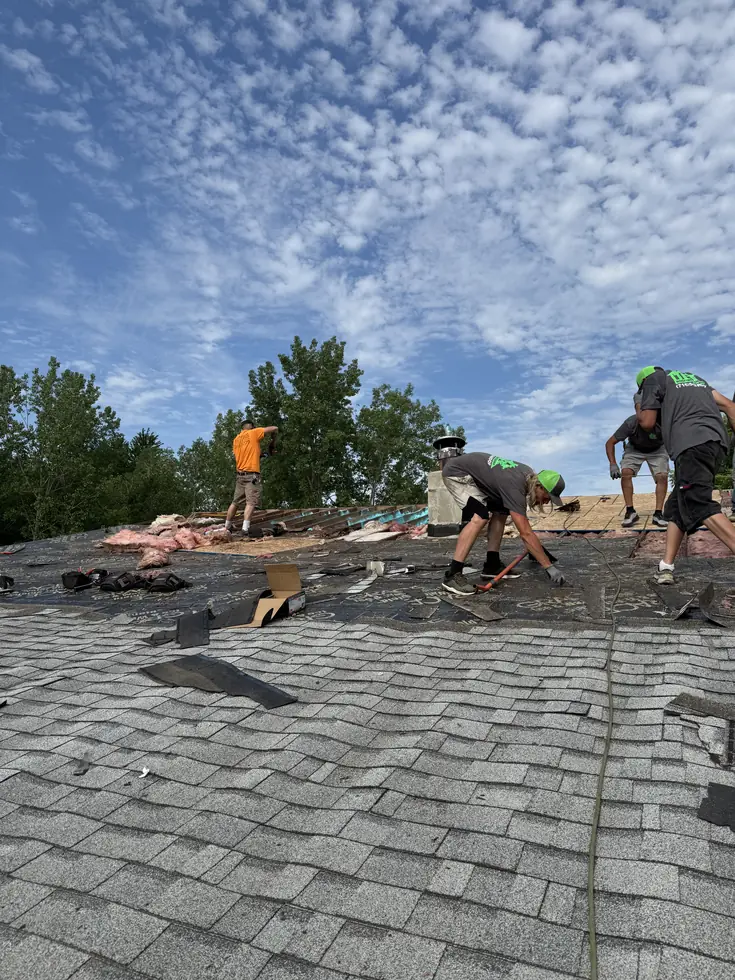
Full roof tear-off underway with the TNE crew on a WNY home

First 48 hours: what actually matters

  1. Make it safe. If there is standing water near electrics, or anything structural has come down, that comes before everything else.
  2. Stop the water. Emergency tarping is not cosmetic — most policies expect you to take reasonable steps to prevent further damage, and water that keeps coming in for a week turns a ceiling repair into a framing repair. We do emergency tarping.
  3. Photograph everything, before you touch it. Wide shots showing the whole house, then close-ups. Interior damage as well as exterior. Photograph the debris in the yard.
  4. Keep the damaged material. Do not throw out the shingles that blew into the neighbour's hedge. That is evidence.
  5. Write down the date and what happened. The date of loss matters to the claim.
  6. Call your insurer and open the claim. You do not need a contractor's number before you can do this.

Do not sign anything with a contractor before your adjuster has been out, and never sign a document that assigns your claim benefits to a contractor unless you have read it carefully and understand it.

What storm damage claims usually cover — and what they usually do not

Broadly, homeowners policies cover sudden, accidental damage from a specific event: wind, hail, a tree limb, the weight of ice and snow. They do not cover wear and tear. A twenty-eight-year-old roof that finally gave up is a maintenance issue, not a claim, and an adjuster will say so.

That distinction is the single biggest source of frustration in this process. It is also why a roofer who tells you “insurance will definitely pay for a whole new roof” before anyone has looked at anything is telling you what you want to hear.

Things worth checking in your own policy

  • Your deductible, and whether there is a separate, higher wind deductible. Some policies express it as a percentage of the dwelling coverage rather than a flat amount.
  • ACV vs RCV. Actual Cash Value pays the depreciated value of the old roof. Replacement Cost Value pays what it costs to replace it, usually in two payments — the depreciated amount first, and the withheld recoverable depreciation after the work is completed and invoiced. Knowing which you have changes the whole financial picture.
  • Any roof-age or roof-surface endorsement. Some carriers have added schedules that reduce payout on older roofs.
  • Matching provisions, which affect whether the insurer pays to make undamaged sections match a repaired one.

The adjuster visit

The insurer sends an adjuster to inspect and write an estimate. A few things help:

  • Be there if you can, and have your photos ready.
  • Have your roofer there too, if possible. We are happy to meet an adjuster on site. Two sets of eyes on a roof find more than one, and we can point out damage that is genuinely easy to miss from a ladder.
  • Ask for a copy of the adjuster's full estimate, not just the summary page. The line items are where the detail lives.
  • If you disagree with the scope, say so in writing and explain why. Supplements — additional items added after the initial estimate — are a normal part of this process, not a fight.

About the trucks that appear after a storm

Storm chasers are real. After a significant WNY wind event, out-of-area crews show up, knock doors, offer to “inspect for free”, sometimes offer to cover your deductible, and want a signature that day. A few flags worth knowing:

  • Pressure to sign immediately, before an adjuster has been out.
  • An offer to waive or absorb your deductible. In New York this is not something to treat casually — it misrepresents the loss to your insurer.
  • No local address, or a local address that is a mailbox.
  • No proof of insurance offered, and evasiveness when you ask for it.
  • A workmanship warranty from a company that will not be in the area next year to honour it.

The plain test: will this company be reachable in five years when something needs attention? TNE has been at the same address in Akron since 1994. That is the whole argument.

Where we fit in

We are roofers, not public adjusters or lawyers, and we will not pretend otherwise. What we do on a storm claim is practical:

  • Emergency tarping to stop further damage while the claim is processed.
  • A thorough documented inspection with photographs of every damaged area.
  • A detailed written estimate in a format adjusters are used to reading.
  • Meeting your adjuster on site so the scope is agreed with everyone looking at the same roof.
  • Doing the work properly once it is approved, and invoicing in a way that lets you recover withheld depreciation.

This article is general information, not legal or insurance advice. Policies differ substantially. Read yours, and if a claim is denied and you believe it should not have been, the New York State Department of Financial Services handles consumer complaints about insurers.

Want Someone to Actually Look at It?

Free estimate, in person, no obligation and no follow-up sales campaign. We have been doing this in Western New York since 1994.

Common Questions

Questions About Insurance

The ones we get asked most often.

Will filing a claim raise my premium?

It can, and it varies by carrier and by claim history. For genuine storm damage to a roof, most homeowners find the claim worthwhile. For a small repair that sits near or below the deductible, it is often not worth opening one at all. Do the arithmetic before you file.

How long do I have to file a storm damage claim in New York?

Policies generally require prompt notice, and the specific window is set by your policy rather than by a single statewide rule. Practically: file as soon as you reasonably can. Delay makes it harder to prove the damage came from the storm you are claiming for.

The insurer approved less than my roofer quoted. What now?

This is common and usually resolvable. Your contractor can submit a supplement documenting items the initial estimate missed — a code-required ice barrier, additional layers, decking replacement discovered at tear-off. It is a normal part of the process.

Do you do emergency tarping?

Yes. If a storm has opened up your roof, call (716) 542-7663. Getting the water stopped comes before everything else, including the paperwork.

Keep Reading

More Roofing Advice

Ice Dams in Western New York

If you get an ice ridge along your eaves every February and a brown stain on the bedroom ceiling every March, you do not have a sh…

Read it

7 Signs Your Roof Needs Replacing

Most roofs do not fail dramatically. They wear out quietly over a couple of seasons and then leak on the coldest weekend of the ye…

Read it
Call Now Free Estimate